Posted by: Brandon W. Jones | March 4, 2011

Take The Challenge And Be Great


One of the biggest challenges in life is allowing yourself to be excellent.  There are many opportunities to shine and be great all the time.   It is, however, hard to let yourself be great.  People like to be one in the crowd.  As you begin to be great, you also begin to stand out which can be uncomfortable at times.  Leaders have to great.  Do not be afraid to be excellent.  As you are excellent you allow other to be excellent also.

Posted by: Brandon W. Jones | February 28, 2011

Leaders, Obtain And Keep The Right People: Part 3 of 3

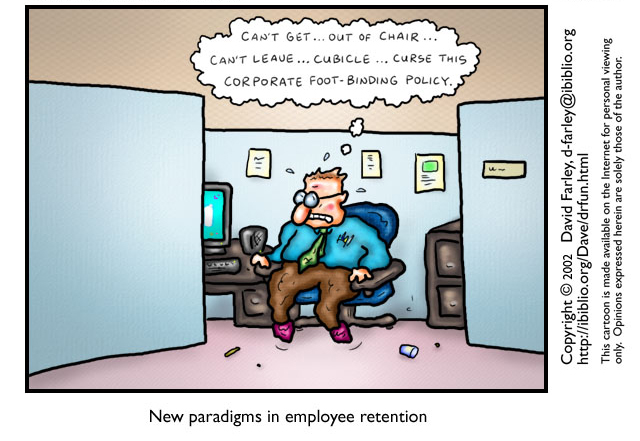
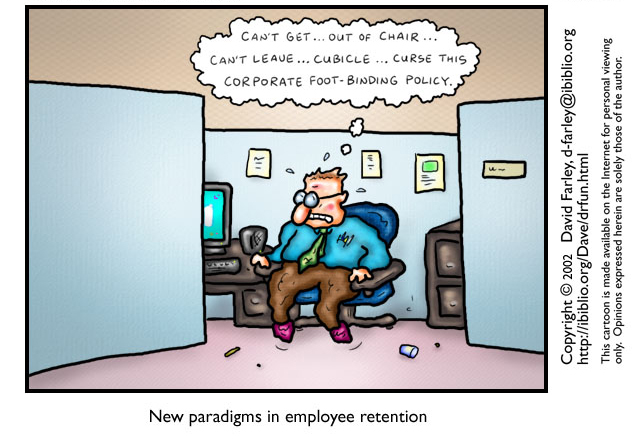
Once good employees are in place, leaders must do all they can to retain them.  Many leaders and companies don’t have a good system in place to retain their employees.  This issue is compounded when you throw in the fire happy leaders.  It is possible for the fire happy leaders to hire and train good employees then fire them on a whim.  A good employee retention system is a key for keeping the qualified and trained employees.

For an employee retention system to succeed, it must discourage leaders from firing people without taking adequate measures to help them succeed.  The following are two safeguards that must be in place for the success of employee retention systems:

  1. The fire happy leaders must have disincentives for firing people and incentives for employee retention.
  2. The employees should have performance incentives and retention programs.

Firing Disincentives and Incentives Ultimately, fire happy leaders cost companies lots of money because each time a trained employee is lost, the company has spend money to train a new employee.  With disincentives in place, fire happy leaders will slow down or stop firing people.  The fire happy leaders that I am referring to are those that fire based on personality conflicts, differing opinions, etc.  Some ways to disincentivize firing are pay freezes, pay cuts, holds on promotions, or demotions.  Although some of these disincentives seem strong, it is very important for leaders to keep the trained employees within the company.  The disincentives will encourage leaders to get over their personality conflicts for fear of punishment.

Read More…
Posted by: Brandon W. Jones | February 26, 2011

Leaders, Obtain And Keep The Right People: Part 2 of 3

One major problem I have seen with the fire happy leaders is that they don’t properly train their employees.  These leaders don’t give their employees the proper training from the very beginning and then they expect them to know more than they should.  All the employees must be trained on the following:

  1. The company policies and procedures
  2. The responsibilities specific to their department
  3. The responsibilities specific to their job title.

The Company Policies and Procedures  In many of the large corporations that exist, there is a specific set of training sessions that every employee must go through when they are hired.  As a part of the training session, HR or some other department reviews all the policies and procedures of the organization.  This is very important because this training teaches the employees what they can and can’t do within the organization.

Read More…

Posted by: Brandon W. Jones | February 23, 2011

Leaders, Obtain And Keep The Right People: Part 1 of 3

Recently I spoke to a manager friend of mine.  He mentioned a major complaint he has with many leaders in the business world.  He said that there are far too many “fire happy” managers.  They are fire happy because they fail in one of the following three areas: 

  1. They don’t hire the right people from the beginning. 
  2. They don’t train the people properly.
  3. They don’t have a good system in place to retain the employees.

Because it all starts with hiring the right person, this post will cover techniques for hiring the right person.

1. Know your how to do your job.  Leaders need to know their own job really well before they can begin hiring the right people to work for them.  They must know the specifics of their job on a daily basis.  They must also know what it takes to do a good job in their current position.  They must be the expert in their department, so they can answer any questions that people might have of them.  Included in being the expert in their department, they must also have a very good idea of what their employees do in their jobs.

Read More…

Posted by: Brandon W. Jones | February 19, 2011

Leaders, Why Aren’t You Having Success?

When I think about what it takes to have success, I think of goals.  Goals are key because they create direction for people once they have drive to do something.  Goals are very important in obtaining your vision for the future.  Without a goal nothing is ever accomplished.

All goals must be S.M.A.R.T. goals.  The acronym S.M.A.R.T. stands for specific, measurable, attainable, realistic, and timely.  There are four timeframes for which leaders must set goals.  The four timeframes are long, medium, short, and immediate term.

Long Term Goals  Long term goals are the goals you set for 10 – 20 years down the road.  In setting the long term goals, you must have a big picture view of your future.  Where do you want to be?  What are your financial goals?  Where do you see your career?  What are your goals for your family?  What goals do you have for relationships, i.e. family, spouse, coworkers, friends, etc?  You must think long term when setting these goals.

Read More…

Posted by: Brandon W. Jones | February 17, 2011

Listening As Leaders

I am sure many of you have experienced interactions with leaders that didn’t listen to anyone.  You may have also seen leaders that only considered the advice of their very close friends or immediate coworkers.  In these situations, was it hard to deal with the leader?  How did you manage to work together as a team? 

As leaders we need to learn the skill of listening.  To listen, you must not only hear the words that people are saying, but also understand and pay attention to people.  There are three groups of people, in particular, that we must listen to as leaders.

Read More…

Posted by: Brandon W. Jones | February 14, 2011

How To Gain Credibility As A Leader

One challenge all leaders face at some point is gaining credibility with their followers.  Followers have a tendency to test leaders to verify that their leaders really are qualified to be their leader.  They also want to be sure that the leader knows what they are talking about.  There are five characteristics that leaders should have to gain credibility with their followers.

Integrity  Leaders must be honest with their followers.  They must do what they say they are going to do and be consistent.  The minute a leader does one thing for one person and something different for another person, he/she loses trust with the followers.  The followers see the inconsistency and question how the leader will respond to them.

Read More…

Posted by: Brandon W. Jones | February 12, 2011

Leaders, Beware Of The Me Monster

I love the explanation Brian Regan gives of what the “me monster” is.  I am sure everyone has had contact with a me monster before.  Me monsters take the form of coworkers, bosses, subordinates, etc.  Me monsters can be very destructive in an organization.  The following are three reasons why me monsters are destructive:

 1. Me monsters are in it for themselves.  When you have a me monster in your organization, they are only in it for themselves. They focus on themselves all the time. They only do things if it directly benefits them. 

Read More…

Posted by: Brandon W. Jones | February 9, 2011

Keeping Perspective As Leaders

As a leader it is very important to keep perspective.  If we lose perspective, we are bound to fail.  The following are three ways to keep everything in perspective.

Learn from the past. It is essential that we look to those who have gone before us and review both their successes and failures.  We must also take time to review what we have done in our own lives and the outcomes.
Read More…

Posted by: Brandon W. Jones | February 8, 2011

Three Rules From Bringing Out the Best in People

The book Bringing Out the Best in People is a very powerful book for leaders in the business world today.  It explains twelve different techniques one can use to develop himself/herself into a great leader.  Of the twelve rules, the three that stood out the most were the following: Rule #1 – Expect the best from the people you lead; Rule #3 – Establish high standards of excellence; Rule #7, Recognize and applaud achievements. 

Rule #1: Expect The Best From The People You Lead.  This rule is especially important in developing a strong company or working environment.  When a leader expects the best from his/her subordinates, they begin to expect the best from themselves.  As the book states, leaders should not manipulate their employees to obligate them to do their best.  Leaders should recognize employee’s abilities and needs and help motivate them.  When I wrestled in high school, my coach always expected the very best of my teammates and me.  This motivated me to exercise and push myself to the limit of my physical capacity in order to do my best.  Expecting the best from people establishes high standards of excellence, and when done properly, develops a great bond of trust between the leader and subordinate.

Read More…

« Newer Posts - Older Posts »

Categories

Design a site like this with WordPress.com
Get started